


Why Do PVC Strip Curtains Turn Yellow or Brittle?

PVC strip curtains are widely used in warehouses, cold rooms, commercial kitchens, and food processing facilities because they are durable, flexible, and cost-effective. They are great at acting as barriers for doorways in warehouses, to insulate the doorways from the elements.
These curtains usually last many years, if treated and maintained correctly. But in some cases, depending how these curtains were maintained, you may notice that your strip curtains begin to turn yellow, stiff, or brittle.
If your PVC changes colour, becomes brittle or stiff, it means it may have been exposed to environmental or chemical factors that has altered the PVC’s quality. This is usually difficult to repair and often means the PVC needs to be replaced.
In this guide, we’ll explain:
- Why PVC strip curtains turn yellow
- What causes PVC curtains to become brittle
- How to prevent damage and extend their lifespan
- When it’s time to replace your PVC strip curtains
What Causes PVC Strip Curtains to Turn Yellow?
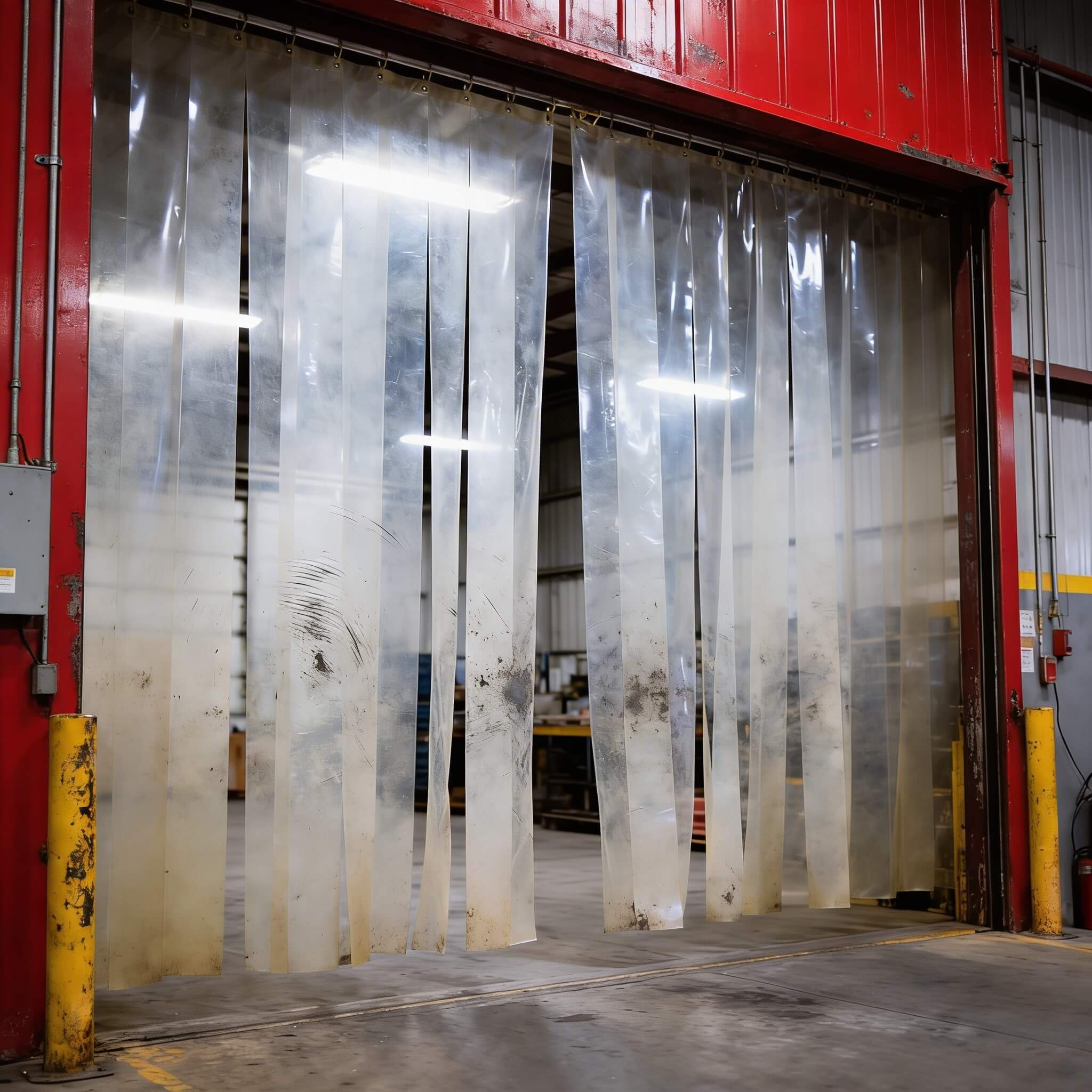
One of the most common issues with clear PVC strip curtains is yellowing, discoloration or losing it’s clarity.
While this doesn’t always affect performance immediately, it is often a sign that the material is beginning to degrade or there is something in the environment that is effecting the PVC.
1. UV Exposure from Sunlight
The most common cause of yellowing is prolonged exposure to ultraviolet (UV) light.
When PVC strip curtains are installed in areas that receive direct sunlight—such as loading bays, warehouse doors, or shop entrances—the UV radiation slowly breaks down the plastic polymers. This causes the clear PVC to develop a yellow or cloudy appearance.
Signs of UV damage include:
- Yellow tint developing over time
- Reduced transparency
- Increased stiffness
Solution: Use UV-stabilised PVC strip curtains in areas exposed to sunlight.
2. Chemical Exposure
Another major cause of discoloration is contact with harsh chemicals.
PVC can react with certain industrial cleaning agents, oils, or solvents, which can damage the surface of the material and lead to yellowing.
Common chemical sources include:
- Strong degreasers
- Industrial solvents
- Bleach solutions that are too concentrated
- Certain disinfectants used in food environments
Solution: Use mild, PVC-safe cleaning products and avoid prolonged chemical exposure. Simple dishwashing soap should be fine. Take a look at our PVC cleaning guide.
3. Natural Aging of PVC
Like most plastics, PVC naturally degrades over time.
As the material ages, the stabilisers within the plastic slowly break down. This process can cause:
- Yellowing
- Loss of clarity
- Reduced flexibility
Even high-quality strip curtains will eventually show signs of aging after years of use.
Typical lifespan of PVC strip curtains:
- Standard industrial environments: 2–10 years
- High-traffic areas: 2–3 years
- UV-exposed areas: 2–3 years
Why Do PVC Strip Curtains Become Brittle?
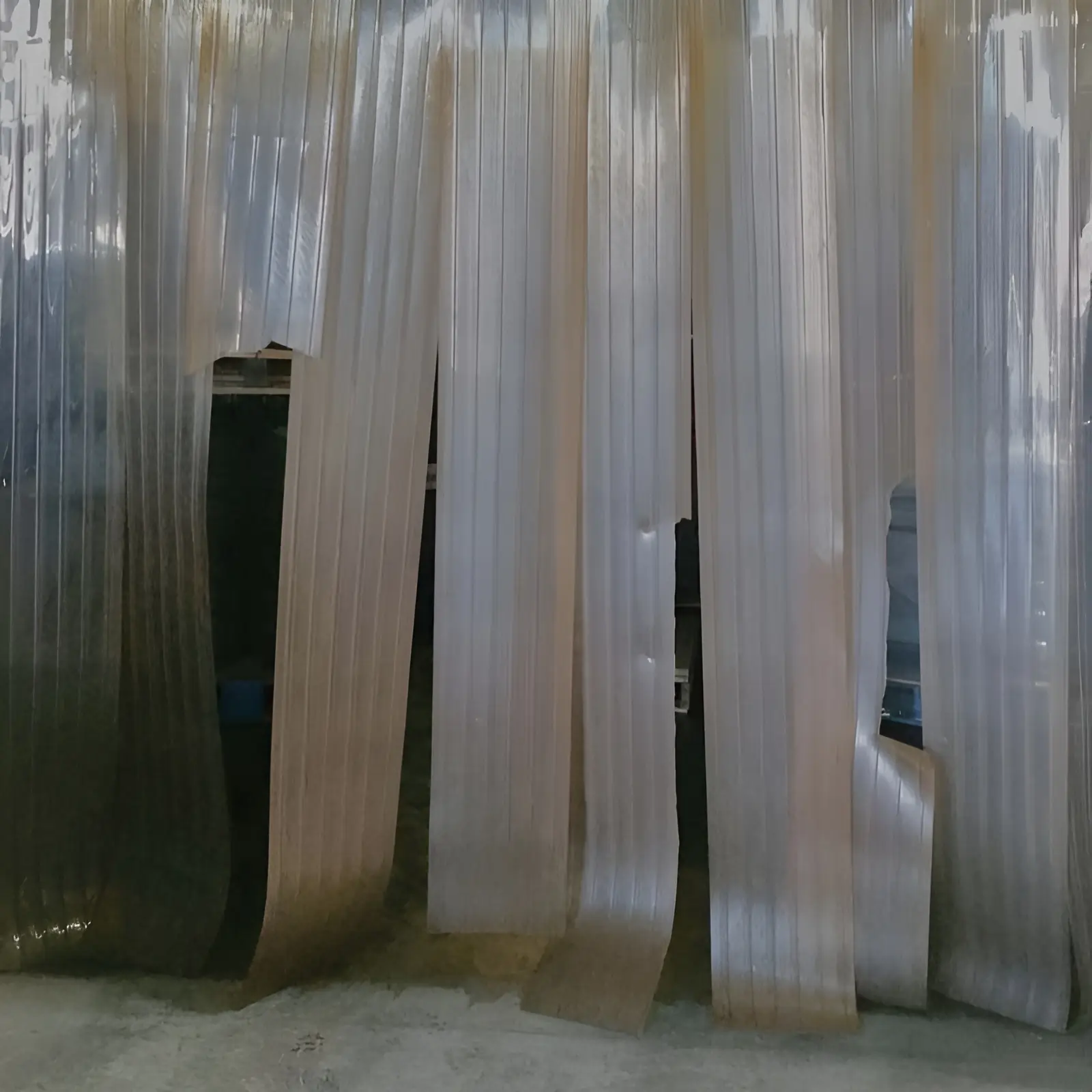
If your strip curtains begin to crack, stiffen, or snap when bent, the PVC has likely become brittle. This happens when the material loses its flexibility and experiences a force that breaks or tears it.
Curtains that become brittle and begin to break, will become less useful at insulating doorways and can even become a hazard in some cases.
There are a variety of issues that can cause the PVC to become brittle.
1. Cold Temperatures
Standard PVC can become rigid in very cold environments.
If standard strips are used in freezer rooms or cold storage areas, the low temperatures can cause the plasticisers inside the PVC to lose effectiveness, making the strips stiff and fragile.
Signs of cold-related brittleness include:
- Curtains no longer swing freely
- Cracking near the mounting points
- Snapping when bent
Solution: Use low-temperature PVC or polar PVC strip curtains, which are designed to stay flexible in temperatures as low as -25°C or even -40°C.
2. Excessive UV Damage
UV exposure doesn’t just cause yellowing—it can also break down the structure of the PVC, making it brittle.
Over time the material loses its elasticity and becomes prone to cracking.
This is common in:
- External doorways
- Loading docks
- Shopfront entrances
Solution: Install UV-stabilised strip curtains designed for outdoor use.
3. Heavy Impact or Constant Traffic
Strip curtains installed in high-traffic areas—such as forklift routes or busy warehouse doors—can wear down faster.
Repeated impact can stress the PVC, eventually leading to cracks or tears.
Common signs include:
- Split edges
- Cracking near the mounting bar
- Torn strips
Solution: Use thicker PVC strips (3mm–5mm), choose ribbed PVC strips for added durability or simply replace individual damaged strips when necessary
How to Prevent PVC Strip Curtains from Yellowing or Becoming Brittle
While some aging is inevitable, there are several ways to extend the life of your strip curtains.
Choose the Right Type of PVC:
Different environments require different types of strip curtains. Examples include:
Standard PVC
- Ideal for warehouses and internal doorways
- Works in temperatures down to about -10°C
Polar PVC
- Designed for cold rooms and freezers
- Remains flexible at -25°C
UV-Stabilised PVC
- Best for outdoor or sun-exposed areas
- Slows yellowing and degradation
Clean Curtains Regularly:
Dust, grease, and chemical residues can accelerate degradation.
Best practices for cleaning PVC strip curtains:
- Use warm water and mild detergent
- Wipe with a soft cloth or sponge
- Avoid abrasive scrubbers
- Rinse thoroughly and dry
Regular cleaning also improves visibility and hygiene, especially in food environments.
Replace Individual Strips When Needed
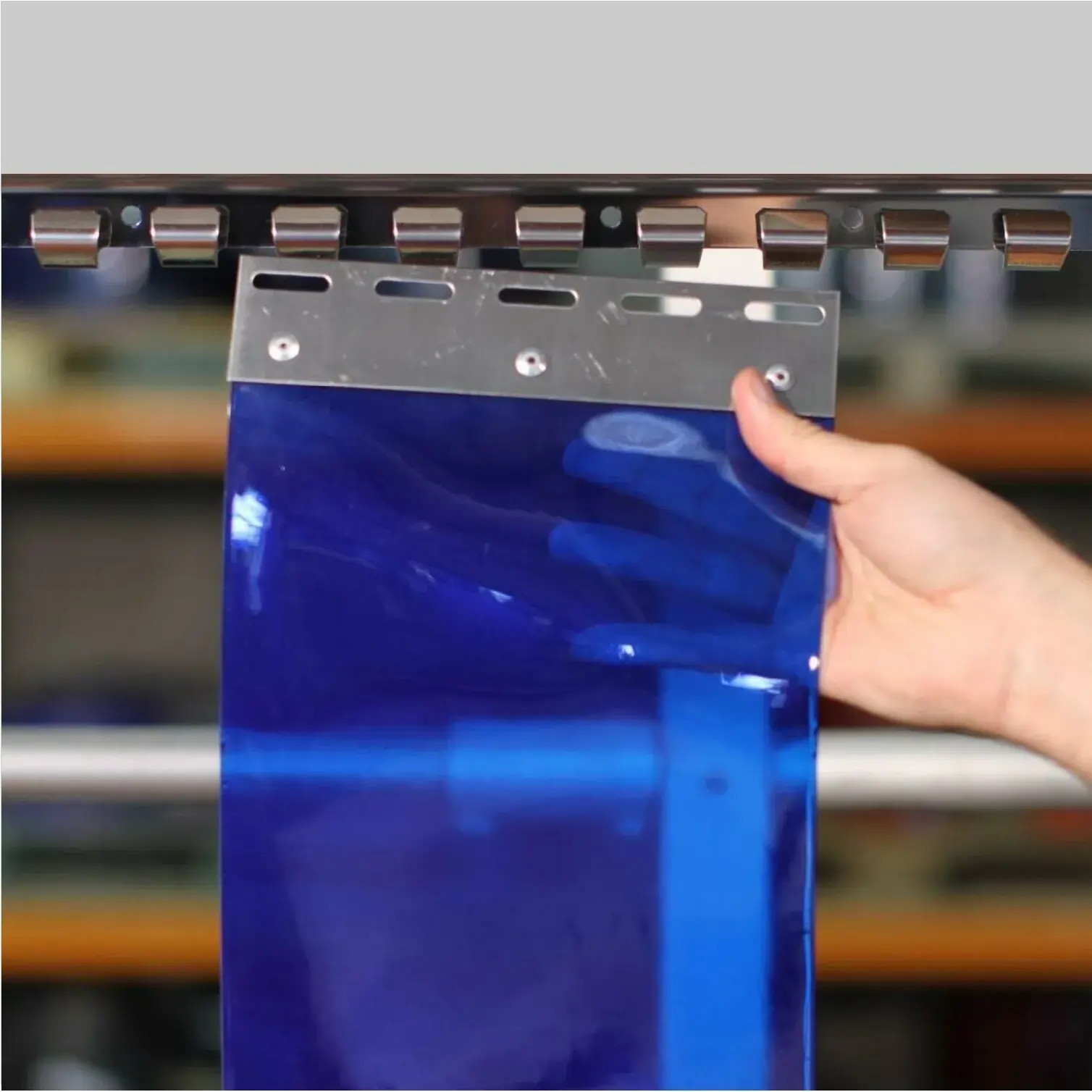
One advantage of strip curtain systems is that you don’t need to replace the entire curtain when damage occurs.
If only a few strips are cracked or yellowed, simply replace those sections.
This can significantly reduce maintenance costs while keeping your doorway barrier effective.
When Should You Replace PVC Strip Curtains?
Eventually, even well-maintained strip curtains will need replacing.
Signs it’s time for new curtains include:
- Severe yellowing that reduces visibility
- Cracks or tears in the strips
- Curtains no longer flexible
- Increased energy loss due to gaps
Replacing worn curtains helps maintain:
- Temperature control
- Hygiene standards
- Energy efficiency

How Long Do PVC Strip Curtains Last?
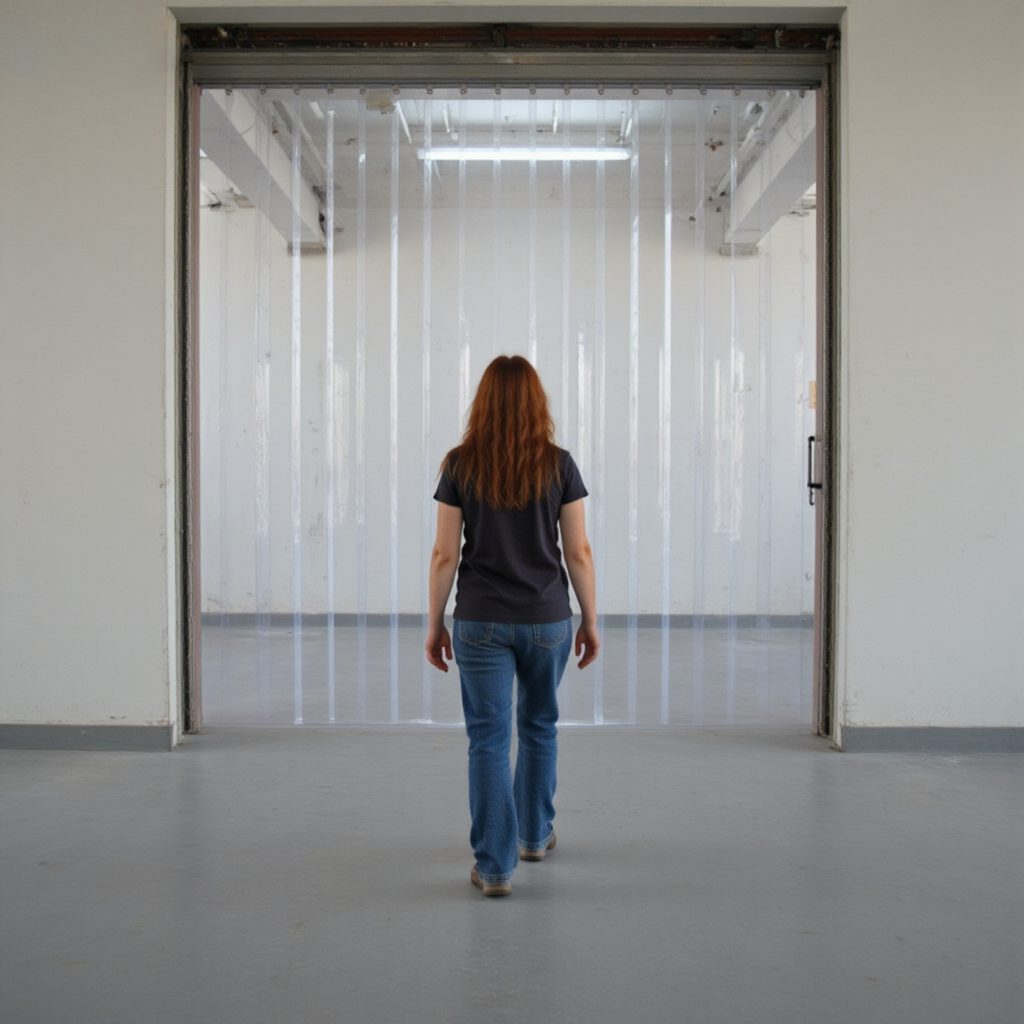
PVC strip curtains typically last 2 to 5 years, depending on the environment they are used in.
Several factors influence their lifespan:
- Exposure to sunlight
- Temperature conditions
- Frequency of traffic
- Cleaning methods
- Quality of the PVC material
For example:
- Warehouse doors: 3–5 years
- High-traffic forklift areas: 1–3 years
- Outdoor entrances: 1–2 years
Regular maintenance and replacing damaged strips early can significantly extend the life of your strip curtain system.
Final Thoughts
PVC strip curtains are designed to be durable and long-lasting, but environmental conditions such as UV exposure, cold temperatures, chemicals, and heavy traffic can eventually cause them to yellow or become brittle.
By choosing the right type of PVC for your environment, cleaning them regularly, and replacing damaged strips when needed, you can significantly extend the lifespan of your curtains and maintain an effective barrier for your facility.
Whether used in warehouses, cold storage rooms, commercial kitchens, or food processing plants, high-quality PVC strip curtains remain one of the most practical and cost-effective solutions for controlling temperature, improving workflow, and maintaining hygiene standards.
Frequently Asked Questions
Why do clear PVC strip curtains turn yellow?
Clear PVC strip curtains usually turn yellow due to UV exposure, chemical contact, or natural aging of the plastic material.
Can yellow PVC strip curtains be cleaned?
If discoloration is caused by dirt or grease, cleaning may restore clarity. However, yellowing caused by UV damage or aging is usually permanent.
Are yellow PVC strip curtains still safe to use?
Mild yellowing may not affect performance, but severe discoloration can reduce visibility and indicate material degradation.
How can I stop PVC strip curtains turning yellow?
Use UV-stabilised PVC, avoid harsh cleaning chemicals, and install curtains away from direct sunlight where possible.
Build your own PVC Strip Curtain and recieve an instant quote!
Save yourself time and create your own bespoke curtain from our strip curtain calculator. This will give you the opportunity to create a complete custom curtain which will be made to your measurements and shipped to you within a few days.